
Accelerate antibody discovery and development with HDX-MS.
Epitope and paratope mapping by HDX-MS supports lead selection, differentiation, and CDR engineering decisions across discovery and development.

What is HDX-MS?
Hydrogen-deuterium exchange mass spectrometry (HDX-MS) is a solution-phase analytical technique that probes protein structure, dynamics, and intermolecular interactions. In solution, backbone amide hydrogen atoms in proteins can exchange with hydrogen atoms in the surrounding solvent. When a protein is exposed to deuterated water (D₂O), these exchangeable hydrogen atoms can be replaced by deuterium atoms, which are approximately 1 Da heavier than hydrogen atoms. The rate of hydrogen-deuterium exchange at each amino acid residue depends on factors such as hydrogen bonding, solvent accessibility, and local flexibility. The increase in mass from deuterium incorporation is measured by mass spectrometry. Depending on the experimental workflow, HDX-MS can provide information at the whole-protein or peptide level and, with electron-based fragmentation methods, at the single-residue level.

HDX-MS Workflow
The HDX-MS workflow involves several key steps, beginning with deuterium labeling of the protein sample. The protein is incubated in a D₂O-containing buffer for defined labeling times, allowing exchangeable backbone amide hydrogens to be replaced by deuterium. At the end of each labeling period, the exchange reaction is quenched by rapidly lowering the pH to approximately 2.5 and the temperature to near 0 °C. These conditions greatly slow hydrogen-deuterium exchange and help preserve the incorporated deuterium. To determine where deuterium has been incorporated, the protein is digested under low-pH conditions, typically with an acid-active protease such as pepsin. The resulting peptides are then separated by reversed-phase liquid chromatography and introduced into the mass spectrometer by electrospray ionization. The mass spectra are analyzed using specialized HDX-MS software to measure deuterium uptake for individual peptides across different time points and experimental conditions. Comparing these uptake patterns can reveal changes in protein structure, dynamics, and molecular interactions.

Applications
Supporting critical decisions across therapeutic discovery and structural biology.
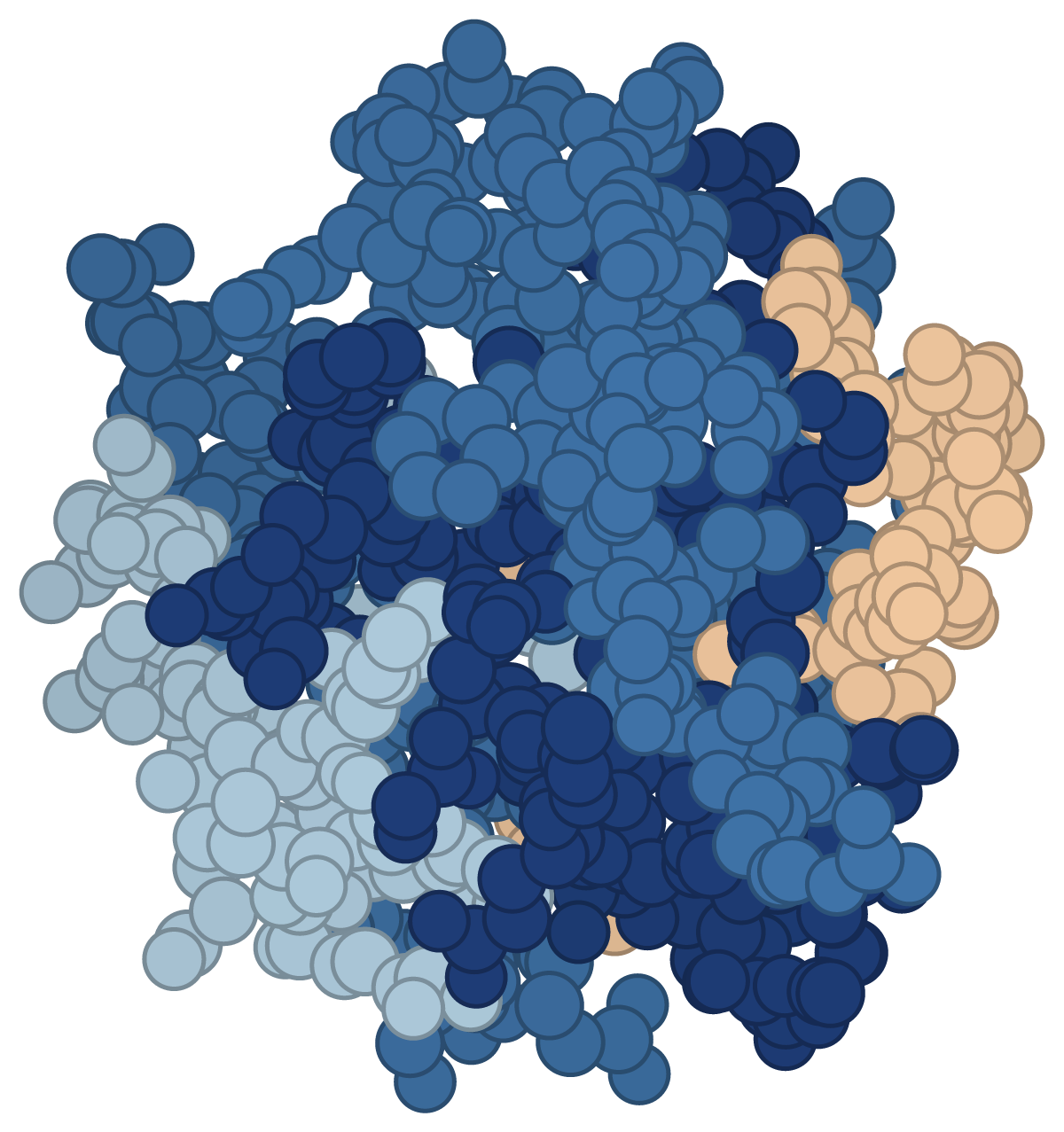
Antibody Characterization
Identify epitopes and paratopes for lead selection, antibody engineering, and IP defense.
Protein-Ligand Interaction Analysis
Map where and how a small molecule, peptide, or DNA binds its protein target.
Protein Structural Characterization
Investigate protein structural changes caused by mutations or post-translational modifications.
Biosimilar Characterization
Compare higher order structure and binding behavior to support biosimilar development.
Why choose HDX-MS by RaptMAb?
High resolution
Resolution down to 1-5 amino acid residues, with cyclic IMS to further separate co-eluting ions.
Throughput
Large numbers of antibodies can be processed in a few weeks using automated robotics and high-throughput LC-MS.
Quality
Experiments are optimized by scientists with over a decade of experience in HDX-MS.
Small-molecule binding
Optimized workflow for small-molecule HDX-MS experiments.
Linear and conformational epitopes
Confident identification of both linear and conformational epitopes.
Binding vs. allosteric change
Distinguish direct binding sites from allosteric conformational changes.
Intrinsically disordered proteins (IDPs)
Years of experience with IDPs, providing epitope information when crystallization fails.
Direct access to the scientist
Results are discussed directly with a structural biologist, so you understand how the binding data supports your discovery pipeline.
Sample Requirements
To ensure successful HDX-MS analysis, we recommend the following guidelines for sample preparation:
- Protein concentration: 1 mg/mL or above (lower concentrations may be acceptable on request).
- Sample volume: At least 100 µL.
- Buffer conditions: Samples should be in HDX-compatible buffers (e.g., phosphate or Tris) and free of detergents and other interfering substances.
- Purity: Proteins should be highly pure (≥90%), with minimal contaminants or aggregation.
- Stability: Proteins should be stable under the experimental conditions, with no significant degradation or aggregation.